The Pulse of Performance: Why Automated Lubrication Is the Future of Industrial Maintenance
Downtime is rarely caused by the thing you were watching. It is caused by a bearing that was starved for six weeks while everyone assumed someone else had greased it. Automatic lubrication exists to remove that assumption from the maintenance chain.
Why manual lubrication fails predictably
Manual greasing is not unreliable because technicians are careless. It is unreliable because it competes with breakdowns, shift pressure and access. The points that get missed are always the same ones: the awkward, the hot, the guarded and the ones behind a machine that has to be stopped first.
There is also a timing problem. Manual greasing happens when the machine is stationary and cold. Grease distributes best into a warm, loaded bearing — which is exactly the condition an automatic system delivers into and a manual regime never does.
And manual application tends toward extremes. Under-lubrication starves the film; over-lubrication churns, overheats, blows seals and pushes contamination inward. Correct lubrication is a small, frequent, measured dose — which is a machine task, not a human one.
What an automatic system actually does
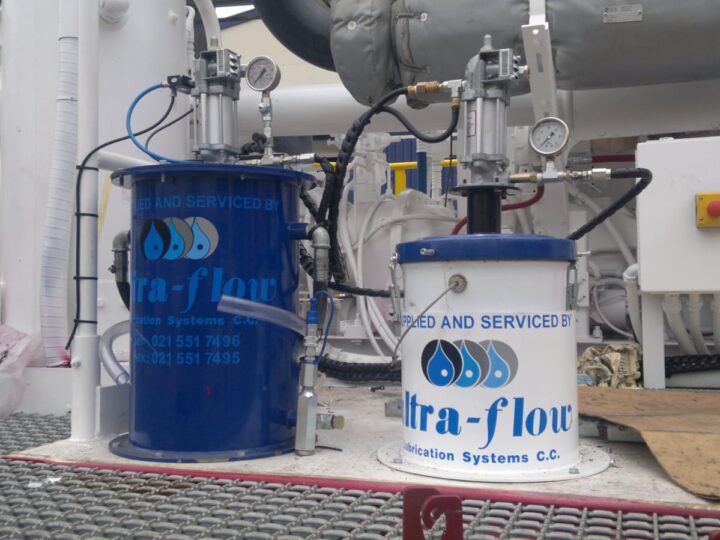
A centralised system uses one pump to feed every point through a distribution network. In a progressive system the divider blocks are mechanically interlocked: pistons cycle in a fixed sequence and none can move until the previous one completes its stroke. Block any single outlet and the whole assembly stalls.
That is a deliberate design property, not a weakness. It means there is no partial delivery and no silent failure. Fit a proximity switch to the master block and the controller stops guessing — it confirms that lubricant reached the points.
Where the controller earns its place
Our A2 Autolube manages cycle timing, monitors reservoir level and system pressure, and raises visual alarms on fault. Bluetooth setup and diagnostics mean a technician can interrogate a running unit without stripping a guard or opening a cab.
Timing is set against running hours rather than the calendar, so lubrication tracks actual duty. A machine that works double shifts gets double the lubrication automatically, with nobody recalculating a schedule.
Where equipment sits away from daily supervision, the Roamer GSM module reports status, history logs and rolling totals to a web portal, and allows settings to be changed remotely. A cycle count that has stopped advancing is a warning weeks ahead of a hot bearing.
The economics, honestly
An automatic system is not free and it is not maintenance-free. Reservoirs need filling, lines get damaged, and a system nobody ever looks at will eventually fail quietly — which is precisely why verification and monitoring matter more than the pump itself.
What it does reliably is convert an unplanned failure into a planned task. Bearing replacements move from emergencies into scheduled work, and the machine keeps earning while the workshop plans around it.
Where to start
Start with the assets that hurt most when they stop, and the points nobody can reach safely. Ultra-Flow has been designing and installing centralised lubrication in the Western Cape since 1989, and manufactures its own controller range at Montague Gardens, Cape Town. Speak to an engineer about the equipment you cannot afford to lose.