Nozzles and Spray Patterns: Lubricating What You Cannot Pipe To
Not every lubrication point can take a grease line. Open gears, drive chains, wire ropes and slew rings are moving, exposed surfaces — you cannot pipe to a bearing that is not there. For these, lubricant is applied as a spray, and the nozzle becomes the most important component in the system.
Why spray is a different discipline
A divider block delivers a measured shot to a fixed point. A spray system has to cover an area, on a surface that is moving, without wasting lubricant into the air or onto the floor. Three things decide whether it works: pattern, volume and timing.
Pattern determines where lubricant lands. A flat fan suits a chain or a gear face; a cone suits a broader surface. Volume determines how much reaches the surface per cycle. Timing decides how often — and on rotating equipment it must be synchronised to rotation, not to the clock, or coverage is uneven.
Getting the pattern right
Under-spraying leaves dry bands that show as uneven wear across a gear face. Over-spraying is not merely wasteful — excess lubricant collects dust and abrasive fines, and on open gear drives in quarry and cement environments that paste does more damage than a light film ever prevents.
Nozzle selection therefore starts with geometry: distance to the surface, face width, surface speed, and the viscosity of the lubricant at working temperature. Open-gear compounds behave very differently at 6 AM in winter than at midday in February, and a nozzle selected only for the warm case will not deliver in the cold one.
Chains, ropes and open gears
On a drive chain, lubricant must reach the pin and bush — the internal bearing surface — not merely coat the outside of the plates. That means applying to the inner surface, timed to chain speed, in small frequent doses rather than heavy occasional ones.
On wire rope, penetration into the core is what prevents internal corrosion and fretting, and internal corrosion is invisible from the outside until it is serious.
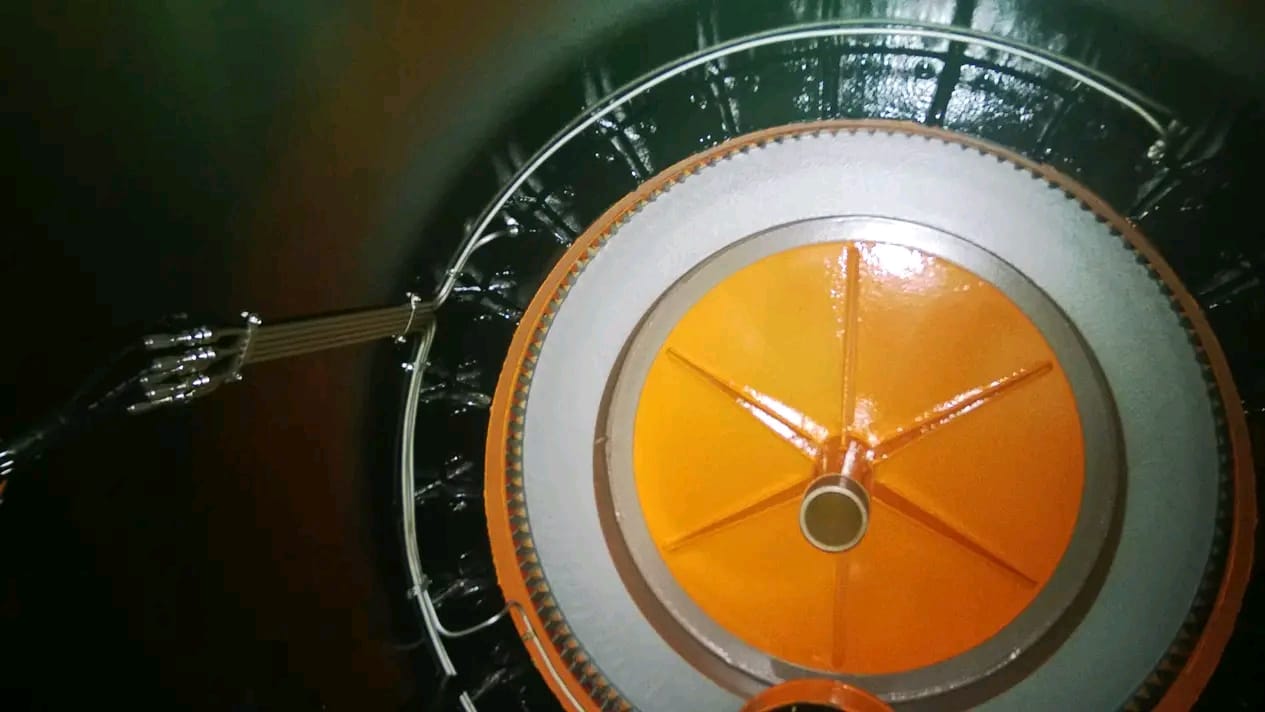
On open girth gears, the goal is a continuous film across the full face width with no dry bands and no accumulation in the root.
Control and verification
Spray systems use the same controller family as our piped systems. The A2 Autolube handles cycle timing with level and pressure monitoring and visual fault alarms; where equipment sits away from daily supervision, the Roamer GSM module reports status, history logs and rolling totals to a web portal.
Verification matters more on spray than on piped systems, because a blocked nozzle is silent. There is no divider block to stall and no obvious symptom — just a surface quietly running dry until it starts to wear.
Ask us about your application
Spray lubrication rewards getting the specification right and punishes guesswork. If you are running open gears, long chain drives, wire rope or slew rings, tell us the geometry, the environment and the lubricant, and we will work through nozzle selection, placement and timing with you.
Speak to an engineer or submit a design request. Ultra-Flow has been engineering lubrication solutions in the Western Cape since 1989.